The problem
Founders often prototype with printed parts, off-the-shelf brackets and whatever fasteners were on hand. That proves the idea, but a shop can't quote it: there are no drawings, the tolerances are guesses, and some features need expensive setups or can't be made at all.
How I approached it
- Combined several loose pieces into fewer parts, which means fewer drawings and less assembly.
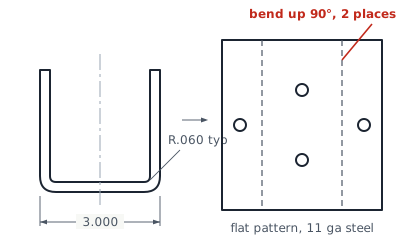
- Turned the printed bracket into a formed sheet metal part with standard bend radii, bend reliefs and holes kept clear of the bends.
- Designed the machined block for one or two setups and standard tool sizes.
- Switched to standard fasteners and press-in hardware, and put tight tolerances only on the features that locate the sensor.
Checks
Flat pattern using the shop's bend deduction, bracket deflection under the sensor load, and a tolerance stack on the sensor's position. [Add your calcs and the before/after part count.]
What was delivered
- Part and assembly models
- Drawings that dimension the critical features and reference the model for the rest
- DXF flat pattern for the laser or punch
- A one-page summary of what changed and why